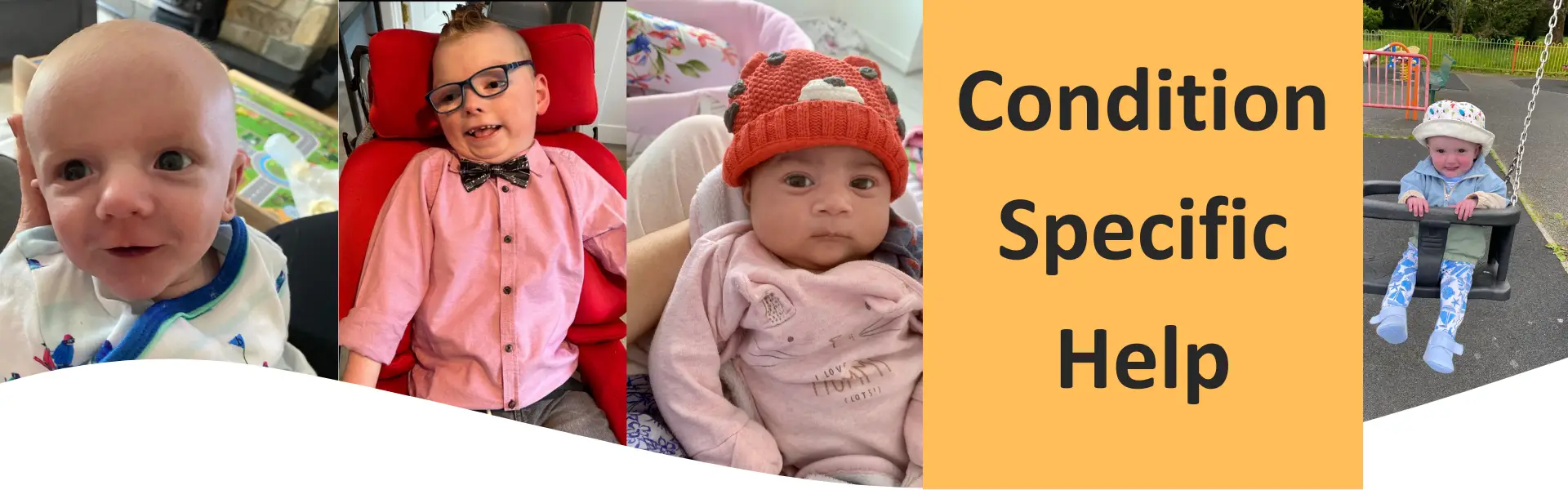
This page contains a list of diseases that a number of children in the Republic of Ireland and Northern Ireland suffer from. This is not an exhaustive list, there are many more rare diseases that are not listed here. Where possible we have tried to link to national charities/bodies whose work is oriented towards a specific disease. If you feel that there should be a disease added to this list, find any broken links or would like to be included as a link for any of the below diseases please contact info@aiihpc.org
A more comprehensive list of life limiting children’s diseases can be downloaded here: Directory of Life-Limiting conditions
Not all children will receive a diagnosis of what their condition is or can take many years to actually determine what the condition is. A page dedicated to undiagnosed children can be accessed here: Undiagnosed
There are a number of rare conditions that could not be listed here. A page dedicated to rare conditions can be accessed here: Rare Conditions
Cancer is a broad group of diseases involving unregulated cell growth. In cancer, cells divide and grow uncontrollably, forming malignant tumours, which may invade nearby parts of the body. The cancer may also spread to more distant parts of the body through the lymphatic system or bloodstream. Not all tumours are cancerous; benign tumours do not invade neighbouring tissues and do not spread throughout the body. There are over 200 different known cancers that affect humans.
The Irish Cancer Society aims to improve the lives of those affected by cancer. They do this by providing up to date information and a range of services, and by influencing change and raising awareness of cancer issues.
Contact Details: https://www.cancer.ie/
Childhood Cancer Ireland provides a range of psychosocial supports to families from the point of diagnosis onwards, including:
Our psychosocial programme is led by Dr Mairead Brennan, Principal Clinical Psychologist and Director of Childhood Cancer Ireland’s Psychosocial Services.
Contact details:
Northern Ireland Cancer Fund for Children (NICFC) is the leading, local cancer charity for children, young people and their families. Established in 1973, NICFC has 40 years’ experience in the field of cancer support for children and families. NICFC provides practical, financial and emotional support to in the family home, in the community and on the hospital ward.
Contact Details:
Email: info@nicfc.com
Web: www.cancerfundforchildren.com
In Northern Ireland, Macmillan offers practical, emotional and financial support. Their team of professionals provide the highest level of cancer care, while their benefits help people with the financial impact of cancer. They are passionate about assisting people to take the first steps to gain control and start to feel like themselves again.
Contact Details:
Website: http://www.macmillan.org.uk
Congenital heart defect (CHD) or congenital heart anomaly is a defect in the structure of the heart and great vessels which is present at birth. Many types of heart defects exist, most of which either obstruct blood flow in the heart or vessels near it, or cause blood to flow through the heart in an abnormal pattern. Other defects, such as long QT syndrome, affect the heart’s rhythm. Heart defects are among the most common birth defects and are the leading cause of birth defect-related deaths.
Heart Children Ireland is a support group for parents and families of children with a Congenital Heart Disorder. CHD is the most common of all birth defects affecting one in every one hundred children born at present. About half of all babies born with CHD will require heart operations.
Contact Details: www.heartchildren.ie
The Children’s Heartbeat Trust is an independent charity that delivers emotional and practical support to parents and families of children with heart disease in Northern Ireland.
Contact Details: www.childrensheartbeattrust.org
Cystic fibrosis (CF) is an inherited chronic disease that primarily affects the lungs and digestive system of about 1200 children and adults in the Ireland (70,000 worldwide). A defective gene and its protein product cause the body to produce unusually thick, sticky mucus that:
CF Ireland (CFI) is a voluntary organisation that was set up by parents in 1963 to improve the treatment and facilities for people with Cystic Fibrosis in Ireland. CF Ireland also co-operates with medical professionals to give maximum assistance to both parents and children/adults with Cystic Fibrosis.CF Ireland (CFI) is a voluntary organisation that was set up by parents in 1963 to improve the treatment and facilities for people with Cystic Fibrosis in Ireland. CF Ireland also co-operates with medical professionals to give maximum assistance to both parents and children/adults with Cystic Fibrosis.
Contact Details: www.cfireland.ie
The Cystic Fibrosis Registry of Ireland project was established in 2001 to keep the relevant medical records of each patient with cystic fibrosis in a central database. The patient records are entered onto the computer system (database) by Clinical Research Associates from the CFRI.
Contact Details: www.cfri.ie
The Cystic Fibrosis Trust is the only UK-wide cystic fibrosis charity. It seeks to make a daily difference to the lives of people with cystic fibrosis, and those who care for them.
Contact Details: https://www.cysticfibrosis.org.uk/
Primary immunodeficiency diseases (PI) are a group of more than 200 rare, chronic disorders in which part of the body’s immune system is missing or functions improperly. While not contagious, these diseases are caused by hereditary or genetic defects, and, although some disorders present at birth or in early childhood, the disorders can affect anyone, regardless of age or gender. Some affect a single part of the immune system; others may affect one or more components of the system. And while the diseases may differ, they all share one common feature: each results from a defect in one of the functions of the body’s normal immune system. Because one of the most important functions of the normal immune system is to protect us against infection, patients with PI commonly have an increased susceptibility to infection.
The Irish Primary Immunodeficiencies Association (IPIA) supports people and families affected by a primary immunodeficiency in Ireland.
Contact Details: https://www.ipia.info/
The Immune Deficiency Foundation improves the diagnosis, treatment, and quality of life of people affected by primary immunodeficiency through fostering a community empowered by advocacy, education, and research.
Contact Details: https://primaryimmune.org/
Inherited metabolic disorders are genetic conditions that result in metabolism problems. Most people with inherited metabolic disorders have a defective gene that results in an enzyme deficiency. There are hundreds of different genetic metabolic disorders, and their symptoms, treatments, and prognoses vary widely.
The National Centre for Inherited Metabolic Disorders is located at the Children’s University Hospital, Temple St . It is the tertiary care referral centre for the investigation and treatment of individuals suspected of having a metabolic genetic disease in Ireland linked to the Newborn Screening Programme.
The National Centre plays a major role in preventing and treating disability for the Irish population. The neonatal screening for Phenylketonuria commenced in Ireland in 1966.
Contact Details: https://metabolic.ie/
Metabolic Support UK are the leading organisation for Inherited Metabolic Disorders (IMDs), supporting thousands of people worldwide through providing individual support, building communities, and continually advocating for and empowering those living with IMDs.
Since its inception in 1981, they have strived to support those in the rare community, expanding new-born screening, accelerating the development of orphan drugs, and acting instrumentally in establishing EURORDIS, ensuring people living with IMDs have the best quality of life possible.
Contact Details: https://metabolicsupportuk.org/
Muscular dystrophy (MD) is a group of muscle diseases that weaken the musculoskeletal system and hamper locomotion. Muscular dystrophies are characterized by progressive skeletal muscle weakness, defects in muscle proteins, and the death of muscle cells and tissue.
Muscular Dystrophy Ireland (MDI) is a voluntary organisation, which was established in 1972 by a small group of people in the west of Ireland to support families who had a member with muscular dystrophy. MDI’s primary objective is to provide support for people and their families who are living with muscular dystrophy and allied neuromuscular condition.
Contact Details: http://www.mdi.ie
Osteogenesis imperfecta (OI) is a genetic disorder characterized by fragile bones that break easily. It is also known as “brittle bone disease.” A person is born with this disorder and is affected throughout his or her life time.
The Brittle Bone Society is the sole organisation set up to address the needs of people born with Osteogenesis Imperfecta (OI) in the UK and Republic of Ireland. The charity wants a world in which the needs of people in the UK and the Republic of Ireland living with Osteogenesis Imperfecta are understood, respected and fully met.
The Charity works towards improving the quality of life for people diagnosed with OI in the UK and the Republic of Ireland, providing advice, signposting and information, providing financial support for wheelchairs and equipment and raising awareness of the condition. They also support and work with specialist healthcare professionals.
Contact details: http://www.brittlebone.org/
Kidney disease can affect children in various ways, ranging from treatable disorders without long-term consequences to life-threatening conditions. Acute kidney disease develops suddenly, lasts a short time, and can be serious with long-lasting consequences or may go away completely once the underlying cause has been treated. Chronic kidney disease (CKD) does not go away with treatment and tends to get worse over time. CKD eventually leads to kidney failure, described as end-stage kidney disease or ESRD when treated with a kidney transplant or blood-filtering treatments called dialysis.
The Irish Kidney Association is a charitable voluntary organisation founded in 1978. They are dedicated to meeting the needs of renal patients and their families and carers, living with and affected by end stage renal disease. These needs are spread across all aspects of life – medical, social and psychological. The profile of the kidney patient ranges from infanthood to the elderly who are undergoing various methods of treatment – haemodialysis, peritoneal dialysis (both CAPD and APD) and kidney transplantation.
Contact Details: www.ika.ie
Northern Ireland Kidney Patients
Northern Ireland Kidney Patients’ Association is a charitable voluntary organisation, dedicated to the support of Northern Ireland’s kidney patients, their families and carers. Our association, which has almost 400 members, is self-funding and run by kidney patients, their relatives and friends.
Contact Details: www.nikpa.org
Someone born with spina bifida has an opening in the spine. A healthy spine is closed to protect the spinal cord, a bundle of nerves that sends messages back and forth between your brain and the rest of your body. The messages tell your muscles to move and tell you about sensations on your skin. When a baby is growing inside the womb, the spine and spinal cord are developing. But sometimes part of the spinal cord and spine do not develop correctly, leaving an opening where the spinal cord may protrude outside the body. When this happens, a baby is born with spina bifida, a term that means “split or open spine.”
Hydrocephalus, also known as “water on the brain”, is a medical condition in which there is an abnormal accumulation of cerebrospinal fluid (CSF) in the ventricles, or cavities, of the brain. This may cause increased intracranial pressure inside the skull and progressive enlargement of the head, convulsion, tunnel vision, and mental disability. Hydrocephalus can also cause death. Although it does occur in older adults, it is more common in infants.
Spina Bifida Hydrocephalus Ireland
Spina Bifida Hydrocephalus Ireland is a charity that aims to provide information, support and advice to people with Spina Bifida and/or Hydrocephalus, their parents and carers, as well as to promote social inclusion and equality for people with Spina Bifida and/or Hydrocephalus in Irish society.
Contact Details: www.sbhi.ie
Shine is a community of 75,000 individuals, families, friends, and professionals, sharing achievements, challenges and information on living with hydrocephalus, or spina bifida, and related issues. Working together throughout England, Wales and Northern Ireland, they strive to overcome challenges and achieve the best for you and your family.
Contact Details: https://www.shinecharity.org.uk/
A Trisomy is where a baby is born with 3 types of a particular chromosome rather the normal two. Trisomies can occur with any chromosome, but often result in miscarriage, rather than live birth. The most common live birth trisomies are trisomy 21 (Downs Syndrome) Trisomy 18 (Edwards syndrome) and Trisomy 13 (Patau syndrome). Of these Trisomy 18 and Trisomy 13 often lead to children having very short life expectancies.
Down Syndrome Ireland is dedicated to bring the primary source of information and support to people with Down syndrome, their families and the professional community, working towards an improved quality of life for our members along with a respect and acceptance of people with Downs Syndrome as valued members of Irish society.
Contact Details: https://downsyndrome.ie/
Set up by parents for parents of Trisomy children, SOFT, the Support Organisation for Trisomy is a support group covering the whole of Ireland. It is a voluntary group dedicated to providing support for families of children born with Patau’s Syndrome (Trisomy 13), Edwards’ Syndrome (Trisomy 18) and related chromosomal disorders. Support is provided during prenatal diagnosis, during the child’s life and after the child’s passing. SOFT puts families in contact with one another, provides information, funds bereavement counselling, funds respite assistance, publishes the SOFT booklet Why Our Baby and a newsletter, organises conferences and arranges professional speakers, do fundraising through various events and links with S.O.F.T. organisations worldwide.
Contact Details: www.softireland.com
SOFT UK’s mission is to provide support and information to all those who are affected by Patau’s syndrome (Trisomy 13) or Edwards’ syndrome (Trisomy 18) and their related disorders.
SOFT UK seek to offer support and information at all stages of a family’s experience of Trisomy:
Through prenatal diagnosis and making decisions that are right for them
During pregnancy
Caring for an affected child
Ending a pregnancy
Bereavement and loss
When considering future pregnancies.
Contact Details: https://www.soft.org.uk/